By Golf Course Industry
•
September 22, 2026
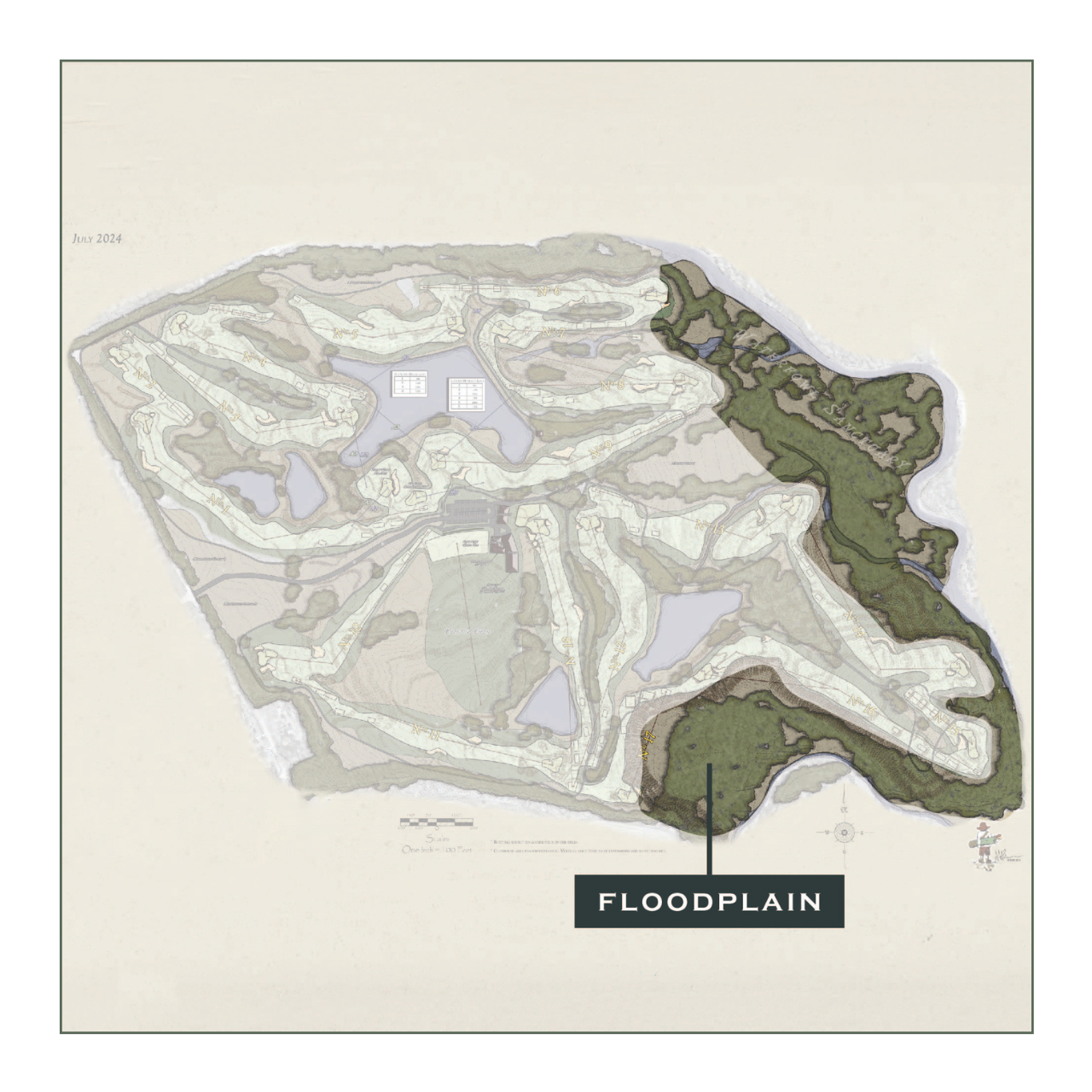
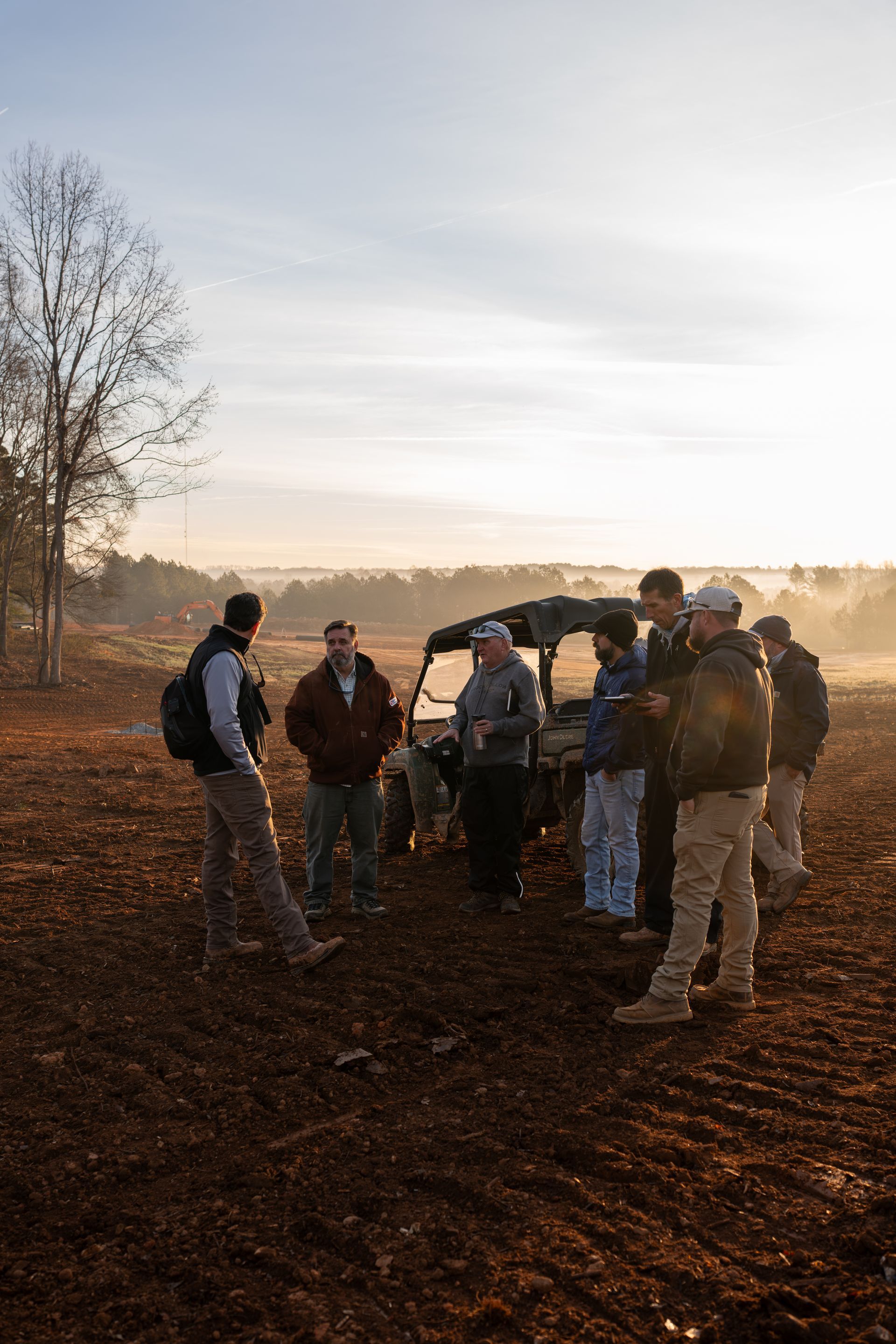
Near fast-growing Greenville, South Carolina, a dynamic and proven team are bringing Golden Age features and Northeast golf flavor to a former duck-hunting plot. Learn how Kawonu contrasts many modern builds. In Simpsonville, South Carolina, there’s something special about the way the elements are converging to give Kawonu a steadfast, grounded beginning. Like a morning mist across the five lakes connected on property, the borders of this community and its impact are indefinite. It’s not merely anticipation, because to some degree anticipation befriends every course under construction. Something feels different, more solid. Enduring. The spirit of Kawonu, provided in part by the land and its Cherokee history, is growing organically because the tangible details have been handled responsibly and with great intention. Founding partner Scott Ferrell has spent decades in the golf business, managing everything from membership sales for the PGA Tour’s TPC properties, to operating a course in Virginia, to serving as president for Gary Player Design. He knows stress is part of the territory. “I'm surprised how few obstacles we have faced,” Ferrell says. “The ones we have faced have made Kawonu better. Our biggest challenge has been to not get ahead of ourselves. Most of us have some level of impatience. We, and our members, want everything to be finished.” Fortunately, no one must wait much longer. Thanks to the hard work of a talented, diligent team, the course will open in June 2027. In a few short months, this nearly 300-acre property bordered by the Reedy River will welcome members for play. THE MIND OF A SHAPER Kawonu lead shaper Joey Chase has been finding a way to make the greens and fairways of the property match the design of architect Andrew Green. “My process for shaping is deciding the constraints of the site and figuring out what could be a problem to complete the design — rock, trees, ground water, water features, and so on,” Chase says. “I spend a good majority of my time in the seat of the cab, but you must get out and walk around your work site to make sure it looks and will eventually play the way you hope it will. I also spend a lot of time trying to ensure that there is continuity with the overall style we are going for.” At Kawonu, he has shaped the green complexes, bunkers, tees and fairways, though the fairways needed little work due to the natural topography. The shaper is toward the front of the construction train, so Chase is diligent, which keeps everyone moving forward. He notes that architects have different styles, some giving general instructions and others being very specific. “More often than not,” he says, “there aren’t strict topo plans to be adhered to religiously, like in the past, which means work in the field can make the most of the ground conditions.” A STELLAR TEAM The group of people leading this project have diverse experiences in golf, and they have worked their way into positions of status. Also, they don’t think about status. They care about the course and the playing experience, and that focus and intensity are an advantage. “We have made great decisions with our partners,” says Ferrell, “starting with Andrew Green,” president and principal of A.H. Green Design. “Those good decisions continued with mass clearing contractor Clary Hood, golf course contractor Total Turf, and irrigation installer GTI Golf. They all did an outstanding job.” David Barrett was on site as director of agronomy in August 2025, Joey Chase is the lead shaper, and Zach Durham is the superintendent. The maintenance facility and the clubhouse are designed by Joel Newman, partner at Thomas and Denzinger. The Hughes Agency and Windsor Woods Consulting are helping with marketing and PR. “We talk about it all the time,” Ferrell says. “You can have the best ground, you can have a great golf course, but you need the right people involved in development and management. We put a lot of thought into that. I like to tell the story of when David joined us at the start of construction. He said, ‘I don’t think you really understand how awesome this project is.’ I thought that was an odd thing to say to the founder of the venture, but now I think he was right. I’m humbled. This golf course is truly exceeding my expectations.” To show their appreciation to all the workers involved, a Builders’ Party was hosted one evening at a nearby venue. Ferrell and the project leaders wanted to emphasize that they knew the project would not have happened without everyone’s hard work, regardless if someone was operating machinery, laying sod or helping in some other way. “It turned out to be a very special evening, maybe the most important event we’ve had,” Ferrell says. Gratitude is powerful. “Kawonu has been one of the most rewarding projects of my life,” Chase says. “The team is fun to work with, and with as much time as we spend on site, that is huge. I was blown away with Andrew’s bold concepts and intentions for the course. We have greens with a lot of interest in them.” Chase typically works most closely with the architect and the builder. “I also discuss more extreme shaping with the superintendent to make sure he feels comfortable that he can maintain the features,” he says. “Most of my communication with the architect is through plans he sends, photos of what I’ve done, and, eventually, we walk through the shaped product.” Each of these leaders has hard-earned experience that has helped them relate to fundamental aspects of this project. That experience impels gratitude for everything the project is and can be. Chase started working with a rake and a shovel for an architect who was a family friend. Barrett started at Croasdaile Country Club in Durham, North Carolina, before stints at Pine Valley Golf Club and working the build, grow-in and leading the maintenance team at Congaree Golf Club in Ridgeland, South Carolina. Green worked carts and the range before moving into maintenance and then construction. Ferrell started in marketing. Together, they have a comprehensive perspective of the work, making the build stronger. “We don’t want to create what other people have done,” Green says. “We want to inspire others. We’re trying, certainly. You see things through your eye and you think of the way somebody else might interpret this piece of ground. We see if we can really think through it and find a creative way to do something different, something no one’s ever seen.” They complement and give compliments to one another. “David is a wonderful teammate,” Green says. “His heart and energy and willingness to do whatever it takes is really inspiring. Joey is so fun, so full of energy and so excited about the game of golf. Working with a golfer who has seen a ton of courses means it’s easier when we start to talk about little bits and pieces, and try to take what’s in my head and apply it to the dirt. He’s a tremendous partner.” Maybe earlier in their careers this project would have seemed unrealistic, but the confidence they possess collectively minimizes challenges. Their support for one another and a mutual belief in their capabilities bleeds depth into the project. This camaraderie empowers them to find a steady way forward, for each other and for the betterment of Kawonu. TUCK'S CABIN A clear vision is helping Kawonu attract a lot of attention, but the foundational story sets a tone. This land was once home to the Cherokee people, where the word “kawonu” means “duck” and honors the harmony among land, water and wildlife. With five lakes on property, water is an integral part of the course. On the largest, a 10-acre body central to the front nine and near the short-game and clubhouse facilities, Tuck’s Cabin will be a gathering place where members can use the supplied fishing gear and enjoy the fireplace, honor bar and time to relax. The pond has largemouth bass, and the dock will be a peaceful place for watching sunsets and bobbers. Barton Tuck is a founding partner and a lifelong outdoorsman, and Noel Tuck is the development manager. This cabin honors their family. CONSTRUCTION DETAILS Turning off Fork Shoals Road, the driveway into the property runs directly between Nos. 1 and 10. Immediately, it’s an immersive golf experience. This land was once used for duck hunting, and the Cherokee word for “duck” is “kawonu,” but now it’s about seeking birdies at this golf-only club. Multiple former and current PGA Tour players will soon be walking these Tahoma 31 fairways. Tahoma 31 was also selected for tees, collars and rough. Covers have been ordered for the TifEagle greens, there is a TifGrand interface and Stadium Zoysia creates the bunker faces. The native areas will be scattered throughout the course, by the driving range, and within the ravine that can be played across on the breathtaking par-3 17th. Native areas will be a mix of sheep and hard fescues, broomsedge and bluestem to display a variety of heights, textures and colors. The land is primarily clay. “There’s no firmer, faster surface than dry clay,” Green says. “You just have to keep the clay dry. When we can do this well, clay gives you really cool topography, and the ground game and elements that people are pursuing in sand.” Clay can be awesome — and tricky. “Thankfully, we’ll have a topsoil cap of four to six inches on top of the clay,” Barrett adds. “Water management is the biggest key and with clay, there won’t be as many nutrients or as much water. Obviously, it doesn’t leach as bad, which is both a good and bad thing. You have control here, but if you put a little bit too much on, it will stick around for longer. So, your forgiveness isn’t the same as on sand.” Early in construction, the topsoil was saved and cleaned to be returned as part of the growing medium, and they stuck to the Golden Age principle of working with the land rather than overpowering it, moving less than 30,000 cubic yards of dirt for the course. Even when the temptation was to move a little more, they resisted, and they ensured the ground game could be played on almost every hole. The routing is spectacular, presenting open vistas across the property, and taking strategic advantage of its highs and lows. The irrigation is a Toro two-wire system with the Smart Hub connected to the Lynx pedestals with digital radio. Irrigation water is pulled from the lakes. Within the course, around the largest lake, two clever short course loops have been routed for special events or to play a few quick holes. With steep bunker faces and some rugged edges, the course has a Northeast feel and deliberately offers something different to many modern designs. Kawonu has some of the traditional structure and lines of a parkland course, in this southern gem of a place. It does feel like a mix of old and new. No. 1 is a solid par 5 with some width in the fairway but a narrow entry to the green. No. 6 is a hog’s back, demanding precision. No. 8 is full of trouble and No. 9, unusually, plays below the lake. No. 13 has lovingly been referenced as “hostile ground.” “The 18th green is the one I am most excited for people to play,” Chase says. “It really exemplifies Andrew’s vision and the boldness of the terrain.” Chase had all the tools he needed to craft this special design. “The equipment has really improved over the years and made a shaper’s life so much easier,” Chase says. “I used a Caterpillar D4 bulldozer, which is a medium-size machine for shaping. We also had a Cat D3 on property to help with the finer details. Both bulldozers have slope percentages in them, requiring less time jumping out checking grades with a grading laser.” Chase roughly set in the bunkers with the bulldozer, knowing that those areas would be refined with an excavator with a knuckle bucket on it, to make all of the detail shaping and bunker edging happen. The build team members with rakes and shovels finished it off. “We are also using a scanning total station,” Chase says. “That is used to ensure that the green shaping is replicated throughout the greens construction process. After I finish shaping the green with the bulldozer, a crew will follow behind me and rake out the rougher contours left behind by the dozer tracks, then they will scan the green and send it to Andrew’s team for review.” That scan is returned to Total Turf to use in coring out the greens, installing gravel and greens mix, and then receiving final approval. It ensures that the green doesn’t have to be shaped again. Total Turf then uses a GPS system to map their feature construction and infrastructure installation. This gives the superintendent a detailed map of everything in the ground as it’s built and helps Barrett know more about what he needs for equipment, staff and other resources. Cart paths have been minimized throughout the course, and construction on the vertical structures will begin soon, including on up to 20 four-bedroom rental cottages situated around the property. Temporary facilities will be available for members next year while the clubhouse, which will have seven overnight rooms, is being built. The maintenance facility will be located by the clubhouse, sunk down and with a berm to shield it. There will be significant cold storage, a mechanic’s bay and defined materials areas. Proximity to Greenville should help with recruiting. “Whether you have a family or you’re young, whether it’s outdoors, or music, the social life is very vibrant around here,” Barrett says. “It’s an easy sell. You don’t have to say much.” John Deere and Toro provided the grow-in equipment, and equipment will be purchased through both, to be delivered in time for the spring season. Trying to understand what equipment will be necessary for maintenance while the build is occurring has been one of Barrett’s responsibilities. Those conversations involve ownership, the equipment companies and third-party financiers. There’s a lot to it. “The club has been amazing,” Barrett says. “They’re used to this because the ownership has done this with many clubs. It’s been super good working with them and they understand. If I didn’t anticipate support, then there probably would be some different ways of thinking, but when you know you have the support, you’re able to think outside the box and find creative solutions.” In addition to Barrett and Durham, there are 14 crew members, two assistants and a mechanic. Barrett handled mechanical needs through most of the construction. The staff size could grow to the mid or high 20s, and there is the possibility for interns next summer. “When you do these types of projects, you anticipate the unseen,” Barrett says. “Being able to adjust and reprioritize, that’s the key to not going completely insane. It’s why we get into this business, figuring out problems and finding solutions. How the course is meant to be presented is the most important thing, and I’m grateful that Andrew absolutely understands and thinks about the agronomic side of it.” The temptation is always to play the course as soon as the turf seems ready, but there are details to clean up, tree work to finish and systems to ensure operate as the ground matures. “The property is so good, and its dimensions are just perfect for the game of golf,” Green says. “The highs and lows are linked together to make a really fun golf course.” “Ultimately, that’s what it’s all about,” Chase adds, “building a fun golf course that people are excited to visit and play.” The time to visit is nearly here. When industry colleagues ask Barrett about the project, he smiles and says, “Don’t worry about it. We’ll show you when it’s done.” BUILDING A BRAND Part of piecing together a new golf club is fostering the culture and developing the intangibles that support the course. “Building a brand starts with a very clearly communicated vision that can be understood and adopted by every stakeholder involved,” says Scott Ferrell, founding partner at Kawonu. “Your message cannot waver, and it should be highlighted through many different channels.” Kawonu focuses on its “golf-only" club message, and the standard and expectations are deliberately high. Kawonu has a website, and accounts on Instagram and LinkedIn. Since November 2024, they have been distributing a monthly newsletter called “The Roost.” Kawonu directly emails members occasionally with important news, and a production company is filming content to produce a "Making of Kawonu" documentary. There are plans for a coffee table book, and multiple events have been hosted — including walking tours, a groundbreaking ceremony and a “Fall on the Farm” social. A pro shop was set up in the office in early 2025 for members to acquire logoed merchandise. Microsites have been established with several vendors.